Self-evolving agent substrate
Maybe the next generation agent
An agent should remember across sessions, find its own tools, run in parallel, and get sharper the more you use it — because every company grows its own. Adjunction AI is the substrate underneath that makes this possible.
 Try Infano
Free to start. Want a walkthrough instead? Book a demo.
Infano is our first product built on the substrate.
What follows from it
Give a company an agent that remembers and evolves, and the way the company works changes on its own. That is the consequence, not the pitch.
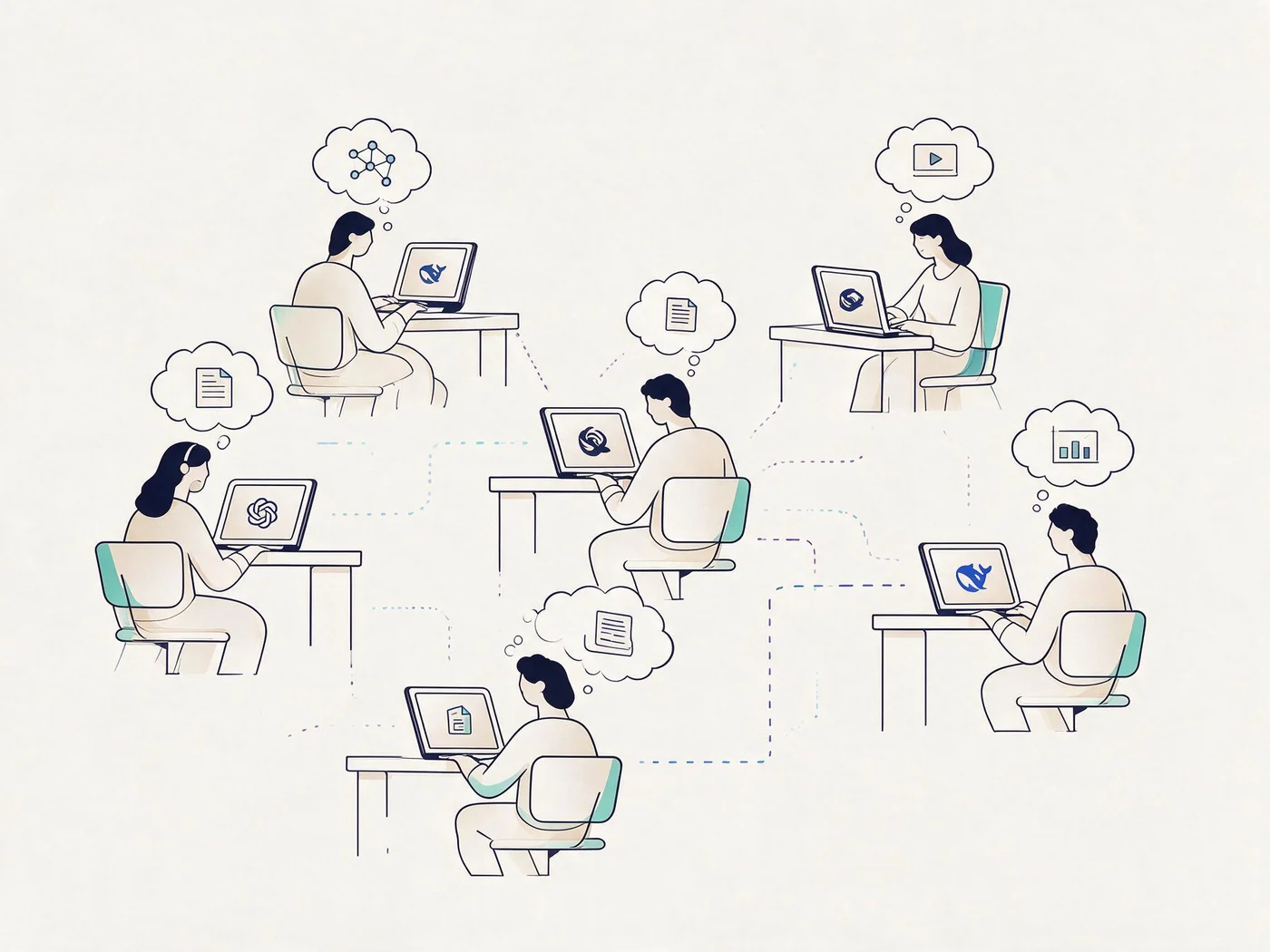
Everyone runs their own AI, researches alone, then syncs by hand in a meeting. Individual output went up; the coordination cost never moved.
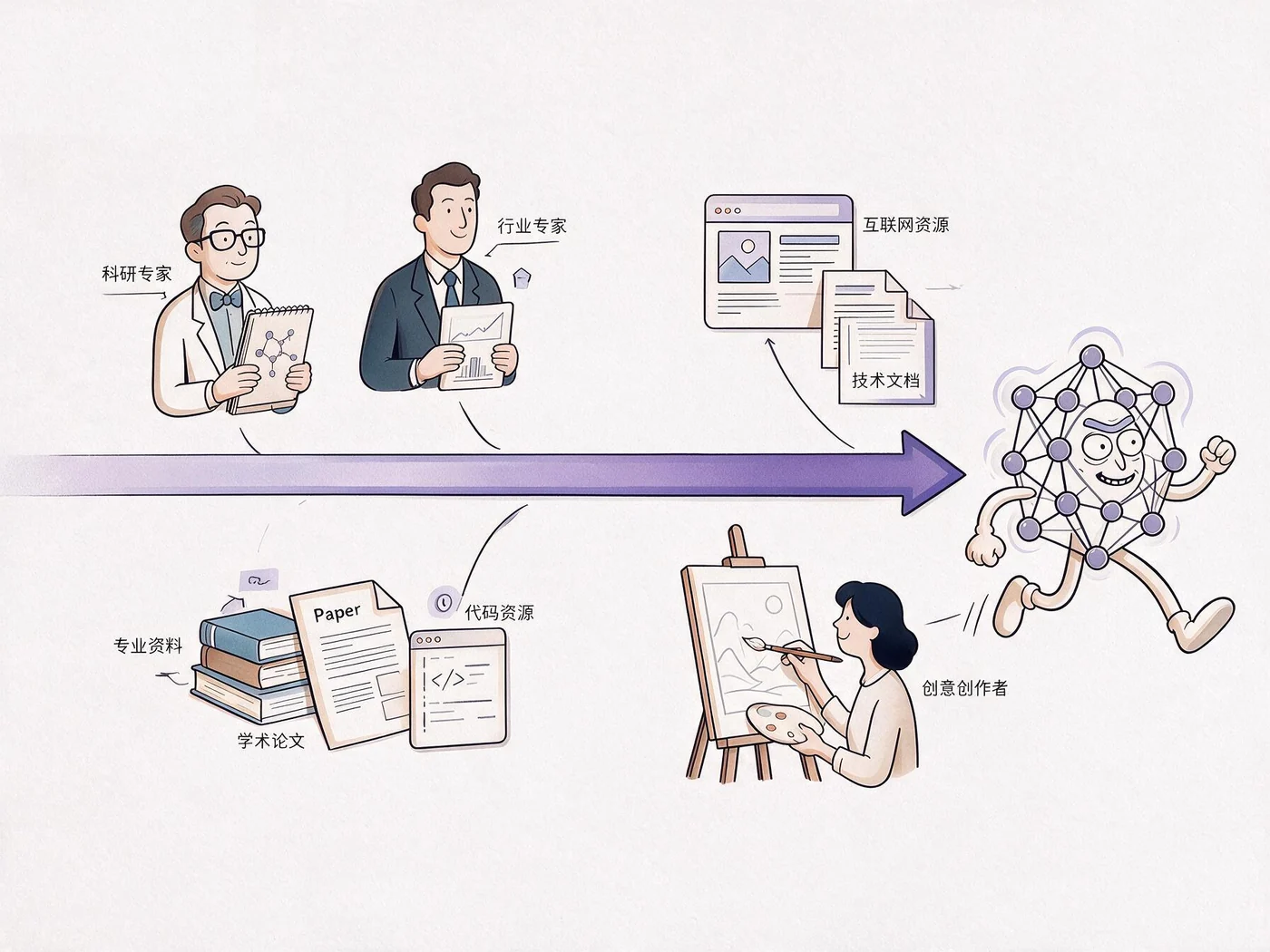
The agent becomes the main thread of work — it runs continuously, pulls people and material in as inputs, and people go back to having ideas and making calls.
Six things we did differently
Not a feature list. Each one is a place we deliberately broke with how agents are built today.
We destroyed the chat list
A sidebar of sessions makes you the librarian — remembering which thread was doing what, carrying context between them by hand. We deleted the list itself. The agent finds its own context: what to recall, which past work is related, which tools the job needs.
You stop managing sessions. They organize themselves.
We focus on recursion, not only loops
Running one agent in a while-loop, or wiring a static graph by hand, caps what an agent can take on. Here a task judges its own granularity and recursively decomposes into sub-tasks that re-enter the same scheduler — so the plan emerges from execution instead of being drawn upfront by a human.
Failure is not a dead end. It is a state that triggers re-planning.
We made the agent a member of the company
You do not operate it, you work with it. It sits in the room, you @ it like a colleague, it asks you back when it needs a call, and it holds its own thread of work while you are away. People contribute direction and judgment; it does the carrying.
Talking to it feels like talking to a person, not filling in a prompt box.
We removed submit-and-wait
No spinner, no turn-taking, no blocking. Message it mid-thought, add something you forgot, interrupt and redirect it — the way you would with a person who is already working. Several people can share one thread at once and the work reschedules itself around them.
Interaction that feels human is itself a moat.
We put the agent on the machines you actually work on
Attach your laptop, your servers, your dev box — we take them under management and the agent works there, in the same environment you do. Same files, same tools, same running state. Not in a sandbox somewhere that you then have to copy things into and out of.
You and the agent are working in one place, not passing artifacts across a wall.
We let it grow into a shape that is only yours
Both positive and negative feedback reweight the paths it takes, continuously. What accumulates is not model weights in someone else's datacenter — it is your own graph, fitted to your environment, your views, your way of working. Nobody can pre-build that, and nobody can copy it.
The longer you use it, the less any competitor can replicate.
The bet
A model can already find the best-known answer by searching. What it cannot know is your environment, your views, your strategy — private, local, changing weekly. Those are only learned in use. So agents sold as packaged domain knowledge commoditize, and the durable moat is each customer's own evolution.
- Bought pre-built by a vendorGrown by your company through use
- Forgets when the session closesRemembers in a graph that compounds
- Someone curates its tool listIt discovers and prunes its own tools
- One agent, one thread, one machineMany runners in parallel, in the environment you work in
Infano is live
The first agent built on the substrate. It keeps its memory across sessions, works alongside you on the machines you already use, and gets better at your work the longer you use it. Web, desktop, mobile, and macOS.